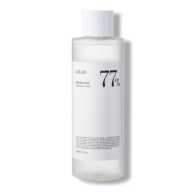
Water is a great solvent. It’s neutral and doesn’t provide any strong positive or negative effects. It just helps components to mix better and to transport active components.
Glycerin is one of the most outstanding and helpful skincare components. It's used in many skincare products because it works and provides notable results. It's one of the best moisturizers. Molecules of Glycerin can absorb water and deliver it into deep layers of the skin making it hydrated.
3
Aloe Barbadensis (Aloe Vera) Leaf Juice
Roles: Skin conditioning
UV Protection
Moisturizing
Soothing
Healing
Aloe Barbadensis (Aloe Vera) Leaf Juice is a natural juice received from Aloe leaves. It has been used in cosmetics for hundreds of ages. Scientists have discovered that it contains more than 200 nutrients: minerals, amino acids, vitamins, and so on. It’s a good component for calming irritated skin. It also helps to heal wounds, helps the skin regenerate faster, improves collagen syncretization, tones up, and moisturizes the skin. It also provides a slight UV-filtering effect.
Green Tea Leaf Extract is a great antioxidant often used in Korean skincare products. It contains EGCG - the most effective flavonoid. It makes the skin look fresh, fills it with vitamines, and helps to prevent aging. It also helps to lower inflammation.
Lavandula Angustifolia (Lavender) Oil is known for ages. It has a pleasant scent but it's not the only great property of this component. It has great antiseptic and antibacterial activity which is great for oily skin. It also helps to heal small wounds and calm down the skin.
Salicylic Acid is an amazing component for oily skin. It’s a famous BHA that chemically exfoliates dead cells, kills bacteria, and prevents acne. It works as a strong pores cleanser. AHAs are not effective for removing sebum from pores, while BHAs are leaders in this space. Salicylic Acid also helps to shrink pores, remove acne scars and make skin tone even. Pay attention: concentration matters! This ingredient is rather aggressive. It can lead to irritation in high concentrations. If your skin has never seen this component before test the product first.
15
Glyceryl Caprylate
Roles: Emollient, Emulsifying, Surfactant
16
Polyglyceryl-6 Oleate
Roles: Emollient, Emulsifying, Surfactant
17
Sodium Surfactin
Roles: Cleansing, Emulsifying, Gel forming, Surfactant
18
Sorbic Acid
Roles: Fragrance, Preservative
Antifungal
Sorbic Acid is a very effective synthetic preservative that is used even in food. It’s considered to be safe for use in cosmetic products. It’s great for increasing the shelf life of a product.
19
Sodium Hydroxide
Roles: Buffering
Sodium Hydroxide is used mostly for formulation purposes. It helps to hold the pH level of a product. It also works as a chemical exfoliator that removes dead cells. Usually concentration of this component is low in skin care products and it’s used mostly for adjusting pH.
Benzyl Alcohol doesn’t belong to harmful alcohols and it will not dry your skin. It’s a stabilizing agent that prevents ingredients oxidization. Having this component in formulation the product will keep efficiency for a longer time. Benzyl Alcohol has a slight almond odor and is used as a fragrance ingredient very often.
21
Limonene
Roles: Fragrance
Antiseptic
Allergens
Limonene provides a nice and fresh citrus scent. It can be found in many plants. It's used in cosmetics because of its low price and pleasant smell.
22
Linalool
Roles: Deodorant, Fragrance, Masking
Allergens
Linalool gives the product a nice and fresh lavender scent. It can be found in many essential oils. It oxidizes during air exposure and becomes allergenic. It can lead to irritation causing problems for people with sensitive skin. The threat is even higher if the product was opened several months ago. In such products, more Linalool is oxidized.